RED MEAT AND COLORECTAL CANCER: Is There a Link?

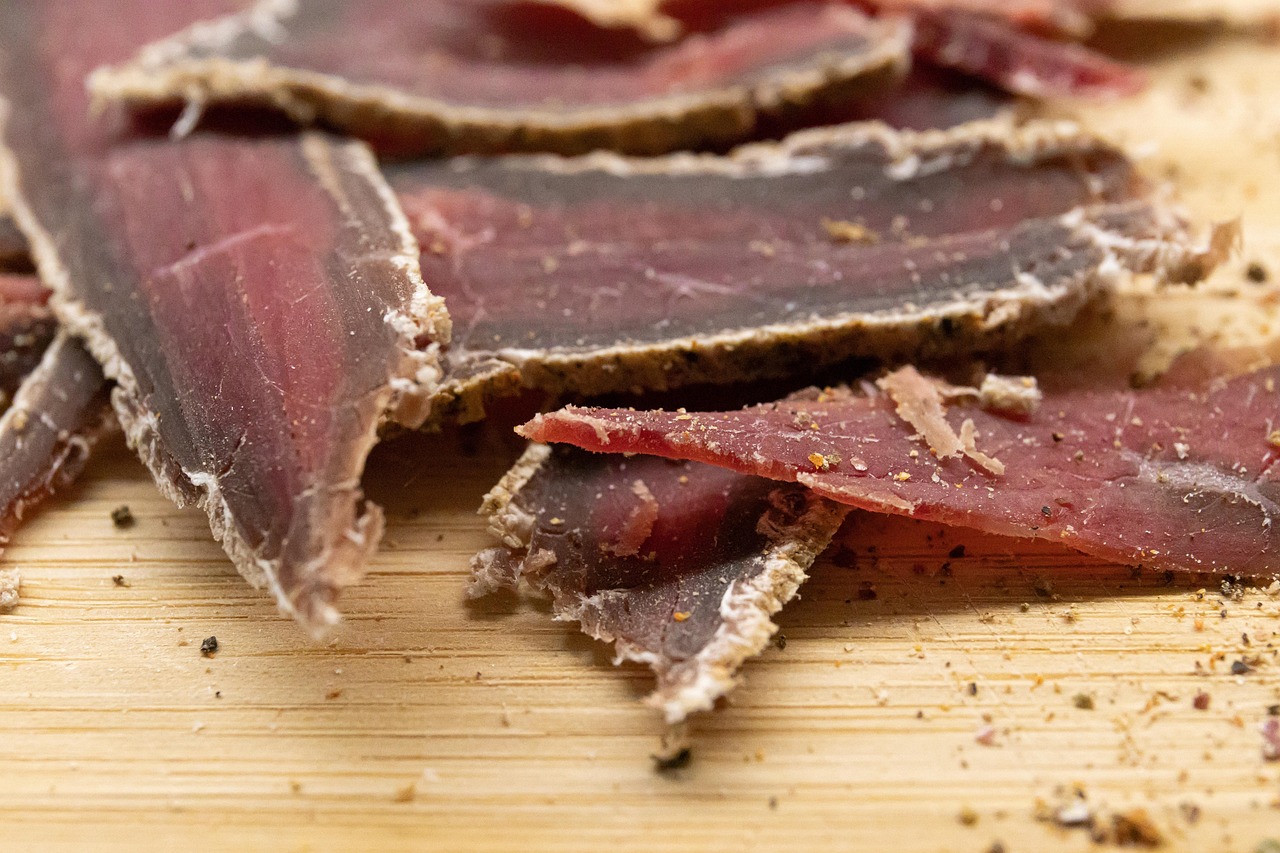
You are what you eat is a phrase popularised by the German philosopher Ludwig Feuerbach as early as the 1850s, although the roots of this philosophical principle can be traced back to Hippocrates. Indeed, on days when we are overwhelmed by work and obligations, when we “have coffee for breakfast,” skip lunch, and spend a spare minute or two on a cigarette or a chocolate doughnut, we should not expect to feel energetic or at the peak of our abilities. If we add an energy drink to the mix, it is not long before we notice hand tremors, difficulty concentrating, and possible digestive problems—ranging from acid reflux to painful abdominal cramps.
The fact is that technological progress—and with it the production, transport, and storage of food, as well as innovations such as frozen bakery products baked on the day of purchase, still soft, warm, and fragrant—has advanced far more quickly than our genes can adapt. Just a few generations ago, bread was a treat made once or twice a week; diets were based on stews and vegetables, with meat added sparingly, often more for flavour than quantity. Meat was boiled or roasted; deep-frying was not a common method of preparation. Desserts relied on fruit or simple sponge cakes with fruit fillings. A pistachio-filled doughnut? Unthinkable at the time.
Although meat drying for preservation, as well as the early forms of dishes like steak tartare, date back to distant history, the first processed meats—such as sausages, cold cuts, and pâtés—associated with carcinogenic effects appeared in the early 20th century. While the high salt content of these products has a negative impact on health (for example, raising blood pressure), the real culprits behind their carcinogenic potential are nitrates and nitrites.
A fresh-looking extra pink steak on the shelf is probably the worst choice you could make!
Although nitrates and nitrites were originally added as preservatives (for example, to inhibit the growth of C. botulinum), today they are used in increasingly larger and more problematic amounts, primarily for visual appeal. They stabilise and prolong the familiar pink-red colour that makes meat look “fresh” even after sitting on a shelf for weeks. In addition, they act as flavour enhancers, intensifying the characteristic “sausage-like” taste of meat products.
The end result is that meat—often imported long ago and of lower, sometimes questionable quality simply because it has been stored for so long—can be attractively packaged and sold while still appearing fresh, thanks to artificially enhanced colour. Such products not only carry a risk of carcinogenic effects, but also aggressively undercut domestic, higher-quality meat products on price. These local products may have only just reached the market and may not appear as vividly pink or “fresh,” yet they are nutritionally and qualitatively superior.
CAUSES OF CARCINOGENICITY
Why are nitrites and nitrates carcinogenic, and why primarily to our large intestine? When they come into contact with haem iron (abundant in red meat) and proteins in the gut, they are converted into so-called N-nitroso compounds (NOCs). These NOCs are carcinogenic to the digestive tract, particularly to the lining of the colon and rectum.
NOCs formed in the intestine cause DNA damage in the cells of the intestinal mucosa, leading to mutations. The development of mutations is the first step in the transformation of a normal cell into a cancer cell. If such a cell begins to multiply uncontrollably, carcinoma in situ may develop initially, without penetrating the bowel wall. Over time, further spread allows the tumour to invade the intestinal wall and metastasise to lymph nodes and/or other organs.
Because gut bacteria promote the formation of NOCs—and the highest bacterial load is found in the large intestine—it is not surprising that higher consumption of processed red meat is associated with an increased risk of colon cancer. Alongside dietary adjustments, including reducing processed red meat and increasing fibre intake, it is essential to take colorectal cancer screening programmes seriously; in the United States, population-based screening has been recommended and widely implemented since the early 2000s, with national guidelines endorsing regular screening for average-risk adults.
According to the IARC classification (2015), processed meat is placed in Group 1 carcinogens (proven carcinogens, alongside substances such as tobacco and asbestos), while red meat is classified as Group 2A (probable carcinogens, comparable to UV-A tanning lamps or certain anabolic steroids).
THE RISKS
The incidence of CRC in the United States is approximately 37 new cases per 100,000 people per year, compared with around 24–30 in the EU. Eastern Europe, the Balkans, and Croatia carry a higher risk, with about 44 new cases per 100,000 people annually.
If you receive stool sample test kits by mail—or notice that your parents have received them—do not throw them away. These tests detect invisible blood in the stool, which may indicate dangerous changes in the intestinal lining. The cause can also be benign, such as internal haemorrhoids, but the only reliable way to clarify this is colonoscopy. This allows the physician to directly visualise any changes, such as polyps, which are often removed immediately and sent for analysis.
If you notice blood in the stool—especially in larger amounts—dark, almost black stools, abdominal pain, or alternating diarrhoea and constipation with or without blood and bloating, you should seek medical attention without delay. In addition to colonoscopy, specific blood markers will also be assessed.
If most of your meals consist of red meat (for example, four times a week or more), it is essential to follow preventive recommendations. While a fully plant-based diet may feel unrealistic for many, the first and most important step is to eliminate processed red meat, such as pâtés and cold cuts.

PRVENTION MEASURMENTS
Five-year survival of CRC in the United States and the EU is around 60–63%, whereas in Croatia it is only about 50–52%. This point is crucial: when CRC is detected at stage I, five-year survival exceeds 90%.
It is also important to stress that detection at this early stage is extremely limited with abdominal ultrasound. On colonoscopy, however, these early changes usually appear as small polyps that can be easily removed. Tumour markers may still be normal in these initial stages. The conclusion is clear: although unpleasant, colonoscopy is the examination that saves lives.
Industrial processed meat products—such as frankfurters, pâtés, salami, bologna-type sausages, deli meats, hot-dog sausages, industrial bacon, and canned meats—are foods that should be avoided or at least strictly limited. In contrast, vegetables that naturally contain nitrates do not pose the same risk. Why? In vegetables such as beetroot, nitrates occur alongside vitamin C, polyphenols, and other protective compounds, preventing their conversion into harmful N-nitroso compounds in the gut.
Many people assume that this risk does not apply to homemade cured meats. However, this depends entirely on the recipe. If curing salt or nitrite salt is added to homemade meat, the risk is essentially the same as with industrially processed products. Regarding intake and quantities, the World Cancer Research Fund (WCRF) recommends avoiding processed meat altogether and limiting red-meat portions to no more than two to three small servings per week (beef, pork, lamb). Poultry and fish are not considered risky, while vegetables have a protective effect, making the overall balance and distribution of meals throughout the week crucial.
In other words, it is not necessary to eliminate meat entirely—but processed meat should be avoided, and other meats consumed thoughtfully and in moderation.
A Practical Weekly Schedule for Main Meals
Fish: 2 times per week
Poultry: 2 times per week
Legumes / plant-based proteins: 2 times per week (stews, plant-based patties)
Red meat: 1 time per week (unprocessed only)