Category: LIFESTYLE

Shape and adapt your everyday life routines in a simple and effective way.

SPF 30 vs. SPF 50

Why is SPF necessary, how often should it be reapplied, and is there really a difference between SPF 30 and SPF 50?

SPF (Sun Protection Factor) measures how much longer we can stay in the sun after applying SPF compared to unprotected exposure—the time it would take for an individual’s skin to burn or turn red without protection. However, this definition should not be taken purely mathematically. Otherwise, we might assume that someone who burns after 15 minutes could safely stay in the sun 30 times longer with SPF 30—about 450 minutes (7.5 hours)—which is not true.

Skin reacts differently from person to person, with higher risk for those with lighter skin and eye color, and the time of day also matters. The amount of solar energy the skin receives after one hour of sun exposure at 9:00 a.m. is roughly equivalent to just 15 minutes at 1:00 p.m. For this reason, the general rule today is to reapply SPF—especially on the face and décolletage—every two hours, and more often if you sweat heavily or swim. For optimal protection, SPF cream or emulsion (depending on skin type and tolerance) should be applied about 20 minutes before sun exposure. In practice: after washing your face in the morning, keep your SPF close—right next to your coffee.

So what makes the sun particularly harmful to our skin, especially in summer? UV radiation. Ultraviolet light is a form of electromagnetic radiation with wavelengths just below visible light. While the human eye detects light between 380 and 750 nanometers, UV radiation ranges from 100 to 400 nanometers and is invisible to most people. Interestingly, some individuals can perceive UV light after cataract lens removal surgery, and certain insects—such as bees and butterflies—experience much of the world through ultraviolet-tinted glasses.

UV and skin cancer

Climate change over the past 50 years has contributed to a reduction in stratospheric ozone, which acts as a protective shield limiting the amount of UV radiation that reaches our skin. Unfortunately, this decline is reflected in higher average UV index values, especially during summer. Today, the UV index in Adriatic Sea reaches 8–10, while in the 1970s it was around 5–6 at the same time of year. This increase is directly linked to rising rates of skin cancer. European studies show a striking trend: melanoma, which affected about 5–7 people per 100,000 fifty years ago, now affects between 10 and 25 per 100,000. At the same time, cases of basal cell carcinoma have risen dramatically—from roughly 100,000 cases across Europe 50 years ago to over half a million new cases per year in Germany alone.

Recently, social media has popularized controversial claims suggesting that the increased use of SPF is responsible for higher skin cancer rates—claims that directly contradict verified data showing rising UV exposure. UV radiation is undeniably carcinogenic: it damages skin cell DNA, causes breaks within the cell nucleus, and triggers tumor formation and uncontrolled cell growth. While the harmful effects of UV radiation are clear, SPF products can and should be chosen carefully based on their ingredients. One of the largest clinical studies conducted in Australia—well known for its intense sun exposure—showed a 40% reduction in squamous cell carcinoma and a lower risk of melanoma with regular SPF use.

Beyond cancer prevention, SPF also protects the skin from premature aging, wrinkles, sun spots, hyperpigmentation, and loss of elasticity. Many people take collagen supplements, yet often forget that UVA rays penetrate deep into the dermis, where collagen is located, causing its breakdown. If we do not protect collagen from UV damage, the benefit of supplementing it becomes questionable. The conclusion is clear: choose high-quality SPF creams or emulsions clearly labeled for both UVA and UVB protection.

SPF & vitamine D

Knowing that vitamin D is produced in the skin—and that we protect the skin with SPF—what should we do about vitamin D and supplementation during summer? In short: nothing. If we are healthy, without significant chronic illness, have adequate dietary sources of vitamin D, and are not deficient, summer supplementation is usually unnecessary. SPF does not block all sunlight, so vitamin D synthesis still occurs. For the same reason, despite using SPF, it is still recommended to avoid sun exposure during the hottest part of the day, when the UV index exceeds 8.

Briefly, how vitamin D becomes active: under UV-B radiation, the skin first produces cholecalciferol (vitamin D3). It is then transported to the liver and converted to calcidiol (25-OH-D3), the main circulating form measured in blood. A final step occurs in the kidneys, where calcitriol (1,25-OH-D3), the active form, is produced. Beyond regulating calcium and phosphorus (important for bone health), vitamin D supports immune function. People with frequent viral infections or recurrent sinus and lung infections should consider checking serum vitamin D levels. Because activation requires healthy skin, liver, and kidneys, dysfunction or disease of these organs can lead to deficiency.

How much sun is needed without SPF? If healthy, very little. In summer, about 15 minutes for fair-skinned individuals and around 30 minutes for darker skin tones is sufficient (face and arms exposed), ideally in the early morning or late afternoon. The rest of the day should be spent under SPF protection. In winter, in countries above 40° latitude (including Croatia and much of the U.S.), increased dietary intake and supplementation are often recommended. Scandinavian countries address this through food fortification—Finland, for example, has fortified staple foods since 2003, raising adequate vitamin D levels from about 30% of the population before 2000 to nearly 90% today (with sufficient levels considered 50–75 nmol/L, ideally closer to 75). Vitamin D deficiency should also be considered in liver and kidney disease, in older adults with osteopenia or osteoporosis, certain autoimmune conditions, and in people on long-term metformin (for diabetes), where periodic monitoring is advisable.

Factor 30 or 50?

SPF 30, in simple terms, blocks about 97% of UVB rays (around 3% still reach the skin), while SPF 50 blocks about 98%. At first glance, this 1% difference may not seem significant, but because protection increases exponentially, SPF 50 actually allows around 30% less UVB radiation to reach the skin compared to SPF 30. Choosing the right factor should be an individual decision. SPF 50 is recommended for people with fair skin and light eyes, those who burn easily, have freckles, or a positive family history of skin cancer. For most healthy individuals, SPF 30 is sufficient—provided it is reapplied regularly. Its lighter texture also makes SPF 30 less comedogenic and often preferable (in emulsion form) for highly acne-prone or problematic skin.

The takeaway? Balance, as always. Short sun exposure in the early morning or evening helps maintain vitamin D levels, while direct sun should be avoided entirely when the UV index exceeds 8 (most often between 11 a.m. and 3 p.m.). Choose creams or emulsions with well-verified ingredient lists, and remove them thoroughly—just like makeup—before bedtime. In summer, opt for gentle foams or gel cleansers and avoid harsh mechanical or enzymatic peels to keep the skin resilient and ready for extreme summer conditions.

LEARN MORE ABOUT:
1 2 3 4 5 6 7 8 9

COFFEE – Benefits & alternatives

Early morning hours—the alarm goes off once, maybe twice. The warm, soft bed invites us to stay, but everyday life is waiting: work, university, kindergarten, training, a trip to the market. As daylight slowly breaks and dim light or autumn fog suggests the bed might have been right after all, one thing brings a smile to many of us—the smell of freshly brewed coffee. One of the world’s most popular beverages, connecting cultures, people, and time itself: coffee. Black, Turkish, espresso, instant, café latte, macchiato, cappuccino, white coffee, or modern versions with plant-based milk and flavor additions—coffee is an undeniable part of daily life.

Although often associated with Colombia and Latin America, coffee was first mentioned in the 15th century on the Arabian Peninsula, where mystics used its stimulating effects to stay awake during night prayers. The first coffee houses opened in Mecca and Cairo, and through the Ottoman Empire coffee spread across Europe, becoming part of social and intellectual life. From there, the Dutch introduced it to Latin America, where regions such as Colombia and Brazil offered ideal growing conditions.

C₈H₁₀N₄O₂—better known as caffeine—is a fascinating molecule with many effects on the body. Thanks to its structure, caffeine easily crosses the blood–brain barrier, which explains its strong influence on alertness and mood. Its main effect comes from blocking adenosine receptors, which normally promote sleepiness. By blocking them, caffeine reduces fatigue, increases brain activity, and boosts the release of neurotransmitters such as dopamine, improving mood and focus.

Research shows that caffeine enhances alertness, information processing, and memory by activating the cerebral cortex and brain regions involved in learning, such as the hippocampus. It is therefore no surprise that many of us reach for coffee in the morning—and often again after lunch, when heavier meals tend to make us feel drowsy.

In addition to sharpening mental focus and memory, caffeine increases blood flow to the muscles and improves physical performance.

Caffeine has a dual effect on blood vessels: it constricts those in the brain, while dilating vessels in the rest of the body and muscles. Headaches are sometimes linked to dilated blood vessels in the head—this is why caffeine can help relieve them. This is also why caffeine is included in some painkillers and is commonly used for migraines—an approach that is reasonable as long as such medications are taken only occasionally and provide clear pain relief.

In muscles, caffeine has the opposite effect: by dilating blood vessels, it increases blood flow. In addition, caffeine stimulates the release of calcium, which leads to stronger muscle contractions. If you are planning a workout or more intense physical activity, it can be helpful to have your coffee about 30–60 minutes beforehand. This can improve physical performance. However, it is important to consider coffee’s acidity—people prone to reflux may want to avoid coffee immediately before training.

It is also important to keep in mind caffeine’s effect on the kidneys. Caffeine acts as a diuretic, increasing urine output and fluid loss. Adequate hydration is therefore essential, especially for those who consume larger amounts of coffee throughout the day.

Caffeine has a diuretic effect and increases fluid loss through the kidneys—which is why serving coffee with a glass of water makes perfect sense!

 Of course (as you will read many times on this site) any substance that has benefits for the body also has a threshold beyond which it becomes harmful. Balance is the key to everything, something our bodies tell us clearly at a biological level; the real skill lies in learning to listen to it. Excessive caffeine intake can initially speed up heart rate, leading to uncomfortable tachycardia and even more unpleasant palpitations—the sensation of skipped or forceful heartbeats that can trigger anxiety. This discomfort, especially after afternoon coffee, often interferes with sleep. Modern lifestyles—constant demands, responsibilities, stress, and focus overload—already make healthy sleep–wake regulation challenging. Surprisingly, maintaining a regular sleep cycle today often requires deliberate planning. If you recognize yourself in this, it is worth considering whether adjusting caffeine intake could help. The recommended daily caffeine intake for healthy adults is about 200–300 mg (roughly 2–4 cups, depending on strength and cup size). If you prefer strong Turkish coffee, two medium cups per day are a reasonable limit. Due to genetic differences, some people metabolize caffeine more slowly and may need to limit intake to around 100 mg per day (for example, one 200 mL cup of regular black coffee). Replacing afternoon coffee with lower-caffeine or caffeine-free alternatives is a simple and effective step toward better sleep regulation. In addition to decaffeinated coffee, there are several low-caffeine beverages that are also very healthy options. 

Matcha latte is an increasingly popular choice that, in addition to its gentle green hue, contains on average less than 50 mg of caffeine per serving. It can be prepared with lactose-free milk or various plant-based milk alternatives. A cup of classic Earl Grey black tea contains around 40 mg of caffeine, but it should be steeped for only 2–3 minutes to avoid releasing higher amounts of caffeine. On the other hand, if you crave a coffee-like drink later in the afternoon but do not really need a caffeine “boost,” a healthier option such as a golden latte, made with spices and warm milk, can be a good alternative.

Both coffee and its alternatives are best prepared at home. If you consume them daily or almost daily, pay attention to the coffee, spices, and sweeteners you use, so that this comforting infusion provides beneficial micronutrients while keeping simple sugars to a minimum. Excess sugars can cause rapid spikes in blood glucose, followed by increased insulin release and subsequent fatigue and hunger. Low–glycemic index agave syrup or date syrup, rich in antioxidants, fiber, and iron, are excellent alternatives.

Enjoy your coffee (or its alternatives) every day – in a healthy, balanced way, and without any guilt!

Learn more:

TEA TIME? ME TIME!

A warm blanket, gentle lighting, music or a book you enjoy, and a hot cup of tea—this sounds like an ideal afternoon after a morning shift, or a relaxing day off from the rest of the world. Fruit or herbal, with theine (caffeine) or completely caffeine-free, with honey, lemon, or milk—however you prefer it. One of the oldest (dating back to around 2000 BCE) and most valued beverages in the world has been with us for so long that we have slowly begun to take it for granted. From China, through Japan and India, and later to Europe, the spread of tea began long before Earl Grey became a symbol of British tea culture.

Classic tea comes from a single plant—Camellia sinensis, also known as the Chinese tea plant. It is an evergreen, shrub-like plant that, depending on growing conditions, can develop either as a low, spreading bush or grow upward with a trunk reaching heights of up to 12 meters (in southern and central China). From its first recorded use, when, according to Chinese legend, dried leaves were accidentally blown by the wind into boiling water, C. sinensis has come a long way. Today, it is increasingly mentioned in scientific literature, and growing attention is being given to its medicinal properties.

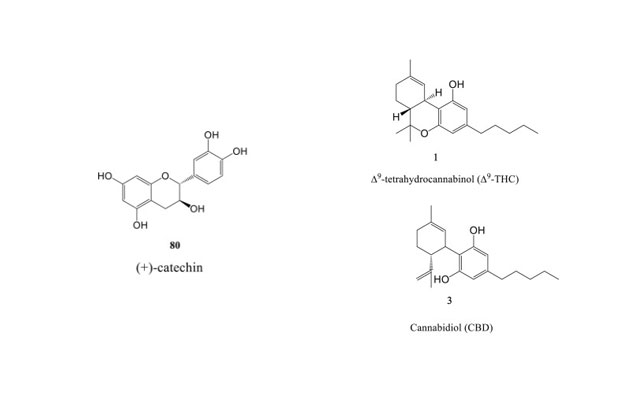
Its anti-inflammatory effects have been well documented. Compounds found in the plant, known as catechins, directly reduce pro-inflammatory molecules called cytokines (COX) in the body. According to more recent studies, they have shown beneficial effects in chronic inflammatory conditions such as atherosclerosis and pancreatitis, and even in the prevention of pre-cancerous lesions. In 2021, researchers studying cannabinoids for cardiovascular protection (from Cannabis sativa L.) identified a range of active compounds with cannabinoid-like effects. Similar protective compounds—catechins—are also found in tea, particularly in green tea, which is the primary form in which the tea plant is consumed.

Picture 1

Molecular structure of catechins (left) vs. cannabinoids (right).

In addition to their cardioprotective effects, research also suggests that catechins may help reduce pain and have a modulating effect on appetite. Depending on the degree of oxidation, teas can be divided into five main types:

Green tea – minimally oxidized, mild in taste, and well known for its health benefits.

Black tea – fully oxidized, strong in both flavor and its effect on alertness, though for this reason it is often the hardest on the stomach.

Oolong tea – partially oxidized, with characteristics that fall between green and black tea.

White tea – the least processed, with a delicate flavor; often used for relaxation due to its very low theine (caffeine) content; the best option for people with gastritis.

Pu-erh tea – fermented, with an earthy flavor; commonly used for digestive issues and as support in weight management.

However, today’s teas go far beyond C. sinensis. Depending on culture, tradition, and climate, every nation has its own specific plant species that are used in the form of teas and tinctures to support health and prevention. These practices and recipes are often passed down from generation to generation. When choosing a tea, it is wise to look for proper guidance and advice—both regarding recommended maximum daily amounts and its use or avoidance during pregnancy, breastfeeding, or in the presence of certain systemic or chronic conditions.

Post-infectious cough

One of the most unpleasant and persistent symptoms that often lingers after more severe—but also moderate—viral infections of the upper respiratory tract. Recently, we unfortunately witnessed the return of whooping cough—fortunately in a milder form, yet still strong enough to cause an intense, dry, choking cough for weeks, and sometimes even months after recovery. This cough was particularly noticeable in the evening hours, disrupting sleep and normal daily functioning in both adults and children.

Alongside other symptomatic treatment measures, certain teas may be helpful in relieving a dry cough.

BAY LEAF TEA
It has anti-inflammatory properties, soothes the airways, and while it primarily calms a dry cough, it can also help with expectoration in cases of mucus buildup.

Preparation: Pour 250 mL of hot water over 3–4 dried bay leaves. Honey and lemon may be added if desired.

Safe use: 1–2 times per day, for 3 to 7 days (do not use continuously for longer periods to avoid digestive discomfort).

Pregnancy: Although, in theory, a small amount of bay leaf tea (once daily for a few days) should not be harmful during pregnancy, due to the lack of sufficient research, pregnant women are generally advised to choose alternatives for cough relief, such as chamomile, marshmallow root, ginger tea, and similar options.

GINGER TEA

This aromatic tea has proven to be particularly helpful for people with asthma.

In addition to its anti-inflammatory effects, its active compounds—gingerol and shogaol—promote bronchodilation, helping to widen the small airways and make breathing easier. Some studies even suggest that ginger may enhance the effect of beta-agonists, medications commonly used to dilate the bronchi in asthma.

Preparation: Slice about 2 cm of fresh ginger into thin pieces, pour over hot water, and let it steep for around 10 minutes. Add honey and lemon if desired. Drink 1–2 cups per day during periods of more pronounced symptoms.

Note: Ginger tea cannot replace either long-term or rescue asthma therapy. It should be used only as a supportive addition to prescribed treatment.


Acute hemorrhoid flare-up

Hemorrhoids are a condition involving swelling—and often inflammation—of the veins in the lower part of the rectum. Although they are usually not life-threatening, they can be very uncomfortable and significantly reduce quality of life. They are aggravated by prolonged sitting, hard stools and constipation, pregnancy, and straining, which is why they are best managed through preventive measures such as dietary adjustments, the use of psyllium, and anatomical cushions designed for sitting.

Hemorrhoids are classified as internal or external, though a mixed form can also occur. There are four stages of hemorrhoids; stages III and especially IV may require surgical treatment. In addition to topical ointments (for external hemorrhoids) and suppositories (for internal hemorrhoids), using a specially designed anatomical seat cushion can also be helpful.

OAK BARK TEA

This tea is especially useful for lukewarm sitz baths, as it has astringent properties that help reduce swelling, irritation, and inflammation. During an acute hemorrhoid flare-up, it can be used both locally and systemically.

LOCAL use:
Lukewarm (not hot) sitz baths: once daily for 15 minutes, for a maximum of 7 days.

SYSTEMIC use:
As a lukewarm tea, taken 2–3 times per day, for up to 3 days.

It is intended for adults over 18 years of age and is not recommended during pregnancy or breastfeeding. In such cases, lukewarm chamomile sitz baths are advised instead.

It may also be used in the form of compresses applied to hemorrhoids, but not if an open wound is present—in which case an examination by a specialist is necessary.

CHAMOMILE TEA

Compresses and lukewarm chamomile tea baths are a good alternative if oak bark tea is currently unavailable in pharmacies or health stores.


Dark circles and puffiness around the eyes

For some, dark circles appear only occasionally and depend on the quality of sleep the night before; for others, they are a more frequent concern. While darker discoloration can be masked with brightening creams and makeup, puffiness is often more difficult to reduce.

Note: If dark circles and swelling persist throughout the day or seem to worsen, it is advisable to consult your doctor so that basic laboratory tests can be performed (complete blood count, blood glucose, kidney function, liver enzymes, and others as assessed by the physician).

BLACK TEA COMPRESSES

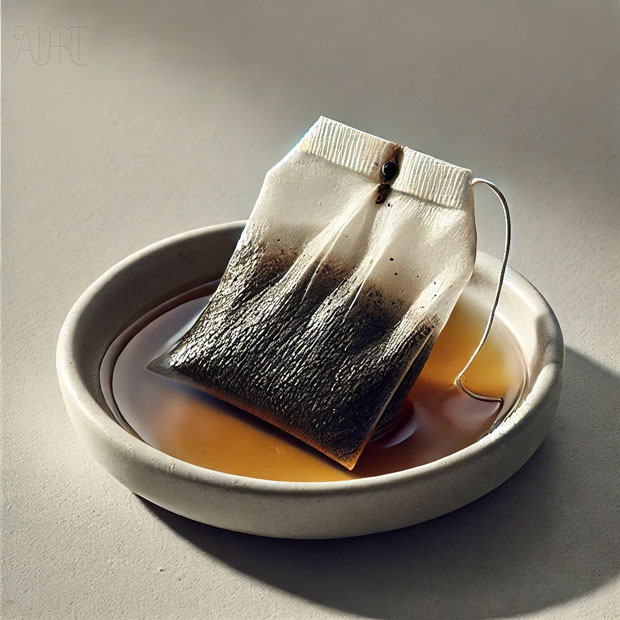
And by that, we mean really black tea—with a high caffeine content, the kind we usually avoid drinking after 5 p.m. The recommendation is to use tea bags and steep them in freshly boiled water for about 2 minutes, then remove them and let them cool. For an extra boost, place the tea bags in the refrigerator for around 20 minutes beforehand.

Apply the cooled, well-drained tea bags as cold compresses to closed eyes for 15 minutes. They can be used daily, ideally in the morning.

If redness or irritation occurs, consult a healthcare professional.

Extra tip: As part of a regular routine for dark circles, it can also be helpful to occasionally use fresh cucumber masks (the more watery, the better), masks made with organic green clay (montmorillonite), and skincare products based on plant-derived caffeine.


Women’s health

Lady’s mantle tea (Alchemilla vulgaris) is well known in traditional medicine as a key herbal tea for supporting and promoting women’s health. This is due to its specific active compounds:

Tannins – Have astringent properties; help with digestive discomfort, cramps, and diarrhea, and reduce bloating.

Flavonoids – Act as antioxidants by neutralizing free radicals and therefore have anti-inflammatory effects. They help reduce menstrual pain and include phytoestrogens that support hormonal balance and ease menopausal symptoms.

Salicylic acid – Has anti-inflammatory effects, helps relieve menstrual pain, and is also used topically as a toner for acne-prone and oily skin.

During pregnancy, the use of lady’s mantle tea should be discussed with a gynecologist, especially in the first trimester, when it should be avoided.


Man’s health

WILLOWHERB TEA (Epilobium spp.)

Traditionally, willowherb has been used to support prostate and urinary tract health, and there is growing evidence for the effectiveness of its compounds in benign prostatic hyperplasia. Studies from 2020 indicate that polyphenols found in willowherb inhibit the growth of prostate cells, suggesting a beneficial effect on prostate health. In addition, several clinical studies are currently underway examining its ability to inhibit the enzyme 5-alpha reductase, thereby reducing the conversion of testosterone into dihydrotestosterone—a process associated with prostate enlargement.

Dosage: 1–2 cups per day during periods of mild prostate-related symptoms, for up to 4–6 weeks.

With longer-term use, it is recommended to take a 2-week break after every 5 weeks and to avoid excessive daily intake to prevent stomach irritation.

Learn more about:
1 2 3 4 5